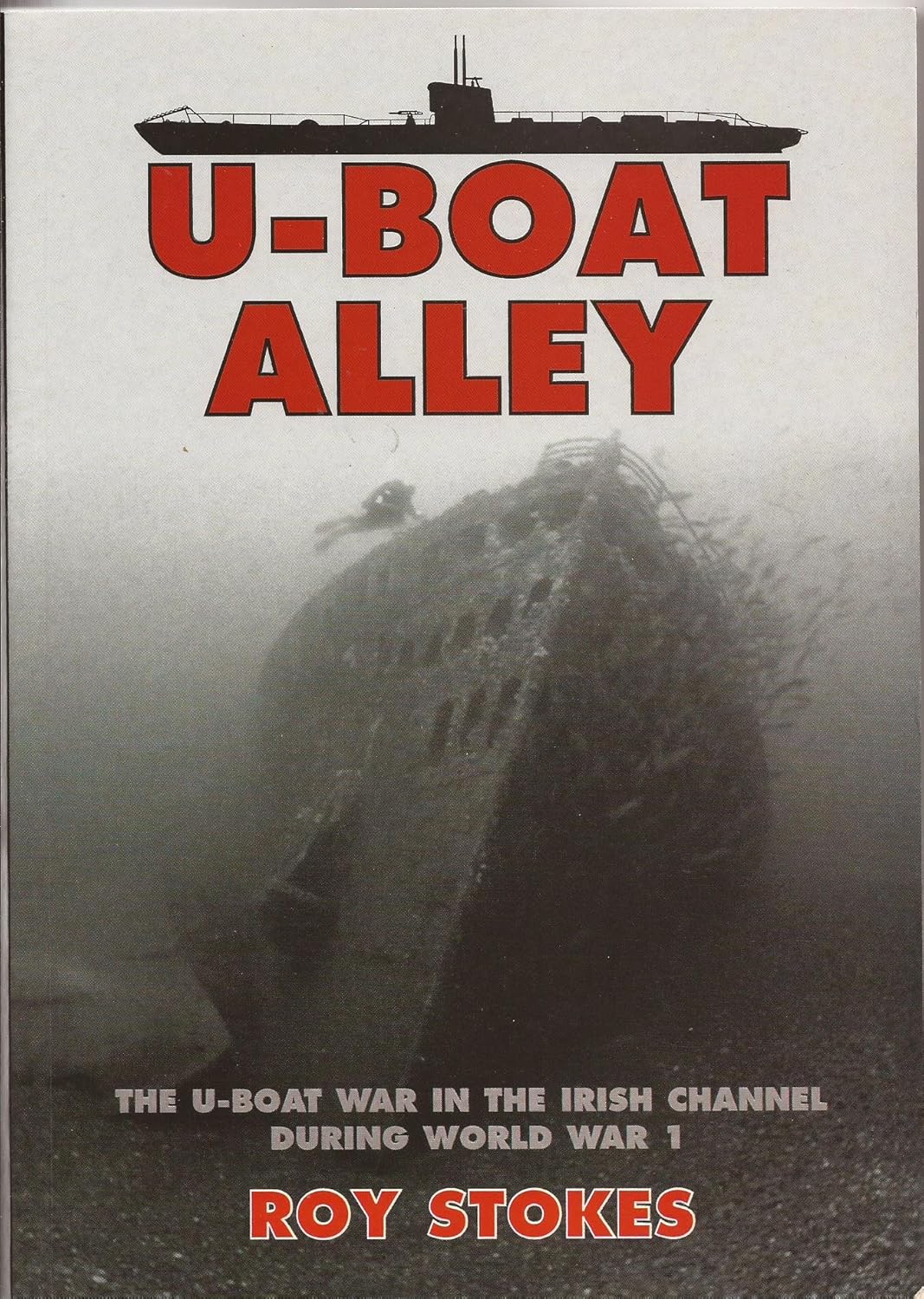
U-Boat Alley: The U-Boat War in the Irish Channel During World War 1
€16.00
Soon after America declared war in 1917, the unsustainable number of Allied and neutral ships being sunk began to decline. This marked a turning point in U-boats tactics that resulted in a dramatic increase in the number of attacks against shipping in the narrow seas that separate Ireland and England. The losses in these new killing zones began to soar, and the destruction of vessels soon began to light up the night skies. Naval and air patrols or even daylight hours afforded little protection to coaster or cruiser. Only short distances from the shores on both sides of the channel, many of the victims were seen plunging beneath the waves. Hardly any folklore of the terrible loss of life and brave actions by ordinary sailors in vulnerable vessels has survived. It has often been said, that a generation was wiped out by WWI. Perhaps this is why no memory remains of the events that occurred in ‘U-boat Alley’. This book tells that story!
In stock
Ships in 24h
Across Ireland
Click & Collect
Free in Wicklow
Easy returns
Within 30 days
Secure checkout
Stripe protected
Soon after America declared war in 1917, the unsustainable number of Allied and neutral ships being sunk began to decline. This marked a turning point in U-boats tactics that resulted in a dramatic increase in the number of attacks against shipping in the narrow seas that separate Ireland and England.
The losses in these new killing zones began to soar, and the destruction of vessels soon began to light up the night skies. Naval and air patrols or even daylight hours afforded little protection to coaster or cruiser. Only short distances from the shores on both sides of the channel, many of the victims were seen plunging beneath the waves.
Mines were laid across the approaches to the ports of Holyhead, Liverpool, The Clyde, Belfast, Dublin and Arklow. The U-boats were fired on, depth-charged, rammed and sunk by the allied warships of Great Britain and the United States. Despite a wide variety of anti-submarine measures adopted by the Allies in the 'Irish Channel', these did not prevent hundreds of sailors and their vessels from being blown to smithereens during the campaign to keep Britain supplied.
With infrequent exceptions, the importance of the U-boat war in the George's Channel, the Irish Sea and the North Channel, particularly during 1917-18, has not been historically recognised. Preventing food, men and materials from reaching Britain had remained the key to a German victory. The story of the part Ireland played in preventing Britain from starving during World War I has remained untold.
Similar events were largely absent in the same areas during World War II, and it has somehow become unimaginable that a prolonged naval campaign involving submarines, battleships and aircraft could have occurred a quarter of a century earlier.
Hardly any folklore of the terrible loss of life and brave actions by ordinary sailors in vulnerable vessels has survived. It has often been said, that a generation was wiped out by WWI.
Perhaps this is why no memory remains of the events that occurred in 'U-boat Alley'. This book tells that story!
Additional information
| Weight | 801 g |
|---|---|
| Book_author | Stokes, Roy |
| Publisher | Compuwreck |
| Imprint | Compuwreck |
| Cover | Paperback |
| Pages | 298 |
| Language | English |
| Readership | / Code: |