
Surplus People: From Wicklow to Canada
€17.99
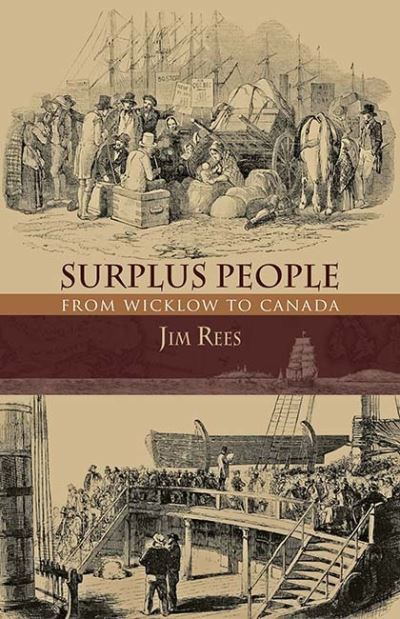
The Great Famine in Ireland was a catastrophe of immense proportions. Landlords, eager to dispose of ‘surplus’ tenants, engaged in ‘assisted passages’, whereby tenants were given financial incentives to emigrate. The clearances of uneconomic tenants from the 85,000-acre Coolattin Estate by Lord Fitzwilliam were the most organised in Ireland.
In stock
Ships in 24h
Across Ireland
Click & Collect
Free in Wicklow
Easy returns
Within 30 days
Secure checkout
Stripe protected
The Great Famine in Ireland was a catastrophe of immense proportions. Eviction, emigration and death from starvation were widespread. Landlords, eager to dispose of 'surplus' tenants, engaged in 'assisted passages', whereby tenants were given financial incentives to emigrate. The clearances of uneconomic tenants from the 85,000-acre Coolattin Estate in County Wicklow by Lord Fitzwilliam were the most organised in Ireland during and after the Famine years. From 1847 to 1856 Fitzwilliam removed 6,000 men, women and children and arranged passage from New Ross in Wexford to Canada on emigrant ships such as the Dunbrody. Most were destitute and many were ill on arrival in Quebec and New Brunswick. Hunger and overcrowding at quarantine stations, such as the infamous Grosse Ãle, resulted in further disease and death. Jim Rees explores this tragedy, from why the clearances occurred to who went where and how some families fared in Canada.
Additional information
| Weight | 201 g |
|---|---|
| Dimensions | 19.8 × 12.8 × 1.8 cm |
| Book_author | Rees, Jim |
| Publisher | The Collins Press |
| Imprint | The Collins Press |
| Cover | Paperback |
| Pages | 160 |
| Language | English |
| Edition | New edition |
| Dewey | 304.87104184 (edition:23) |
| Readership | General – Trade / Code: K |